



Saab Automobile is dead.
The company, which started selling cars 61 years ago, declared itself bankrupt on Monday, setting the stage for a forced liquidation of the storied, but troubled Swedish car maker.
 MENU
MENU SEARCH
Saab Automobile is dead.
The company, which started selling cars 61 years ago, declared itself bankrupt on Monday, setting the stage for a forced liquidation of the storied, but troubled Swedish car maker.
The filing was triggered after former owner General Motors Co., which licensed its key technology, objected to deals with potential Chinese investors, reported The Wall Street Journal.
GM's objection ended a deal with China's Zhejiang Youngman Lotus Automobile Co. that the U.S. auto maker said would hurt GM's business in China.
Saab Chairman Victor Muller halted production in April and raced to come up with funding.
But, one by one, his rescue plans fizzled, as potential investors were either blocked or walked away.
Poor cash-flow and diminishing scale led to a €201.5 million ($263 million) loss in the first half of this year.
A Swedish court on Monday approved the bankruptcy filing, clearing the way for a sale of the company's assets to pay its creditors and 3,400 workers.
Saab has been functioning since September under court protection. Mr. Muller said on Monday that there have been expressions of interest in a possible acquisition of the company.
However, there is probably little interest in purchasing Saab intact, said Martin Skold, an assistant professor at the Stockholm School of Economics who has been studying the automotive industry.
"The most likely scenario is that existing auto makers, probably from China, will purchase selected parts of Saab's technological assets," Mr. Skold said.
Saab was vulnerable because of its weak access to credit, small size and dependence on others for key technology, he said.
The car maker began life as a unit of Svenska Aeroplan Aktie Bologet, which was formed ahead of World War II in 1937 to build planes for the Swedish Air Force.
The company branched into car manufacturing as the war ended, and the first Saab car hit the road in 1950.
It developed a reputation for streamlined styling as well as innovation. It had factory-fitted safety belts as early as 1958 and introduced crash crumple zones and self-repairing bumpers.
Saab is most famous for introducing turbo-charged engines across its lineup in the late 1970s and 1980s under then-Chief Executive Sten Wennlo. Using exhaust fumes to drive a compressor that injected more air into the cylinders, Saab enhanced the output of its small engines at a fraction of the cost of designing new ones. The Saab 900 turbo, launched in 1979, became the company's biggest hit with sales of nearly a million units.
The bankruptcy filing came after struggles under a succession of owners. It last prospered with the Saab 900 in the early 1980s. But by 1989, when a global economic downturn, cut sales soon after it boosted production, the company lost 2 billion Swedish kronor.
Short of funds, it sold a 50 percent stake for $600 million in 1990 to GM, which invested another $100 million before buying the rest of the car business for $125 million in 2000.
GM, which long struggled to win younger and wealthier customers, acquired the brand to appeal to U.S. car buyers that preferred European autos and hoped to revitalize the brand in part by sharing technology from its German Opel unit. With its quirky design cues and unusual heritage, Saab won a following, particularly in the U.S. Northeast, but failed to produce the gains that GM had expected.
Facing stiff competition from Volkswagen AG and its Audi unit, BMW AG and Swedish rival Volvo, Saab never hit GM's 150,000 annual sales target.
Sales peaked at nearly 133,000 in 2006 before falling to 93,000 in 2008 when GM put Saab up for sale.
After GM entered Chapter 11 bankruptcy protection in the U.S. to prevent its own collapse, Saab sought protection from its creditors in Sweden. GM took a $824-million loss on its Saab investment in 2009.
The filing came after GM this weekend said none of the recently proposed ownership changes was meaningfully different from what it had already rejected. Saab's existing models are based on technology licensed from GM, a big player in the Chinese auto market.
Two years ago, GM was prepared to liquidate the company, but it changed its mind under pressure from workers to keep the business alive and agreed to sell the business to the Netherlands-based Spyker Cars NV for $74 million.
Spyker promised to make the company profitable by 2012.
But the 2010 sale to Spyker—a boutique sports-car maker that soon renamed itself Swedish Automobile NV—left it a minnow swimming undercapitalized in a global business.
A later $400 million loan from the European Investment Bank also proved a double-edged sword: While it provided Saab with needed liquidity at first, the car maker was restricted to using it only for developing new technology and cars.
By the time Saab could no longer pay its suppliers this spring, it lacked the financial leverage to secure additional credit, said IHS Automotive analyst Ian Fletcher.
Saab ran out of cash in less than a year. A series of proposed investments during the summer filed to materialize.
Jan-Ake Jonsson, Saab's CEO since 2005, resigned in May 2011. Earlier, suppliers withheld component deliveries forcing a halt to production in April and requiring the car maker to seek protection from its creditors for a second time.According to the bankruptcy filing, Saab has assets worth some 3 billion Swedish kronor ($433 million) that could be sold to repay creditors including Sweden's National Debt Office, which guaranteed the €217 million EIB loan.
Swedish supplier organization FKG estimates that Saab Automobile owes its 76 Swedish suppliers between 800 million kronor and 1.2 billion kronor in unpaid bills.
"This is the end for Saab," FKG Chief Executive Fredrik Sidahl said. "Perhaps a new small business will emerge in its wake, but this is the end for the car factory."
Johnny Kjellsson, who worked at Saab for 27 years, said on Monday, "it feels doleful. Your thoughts go out to all of those who have small children and home mortgages."
Swedish Automobile said it expected to realize no value from its shares and would write off its entire investment in Saab.
Its stock plunged in Amsterdam trading on Monday, finishing down 62 percent to eight euro cents.

Over half of insurance holders ages 18 to 29 reported to be 'somewhat' likely to change providers in the next 90 days, according to CivicScience, which found that interest was lower among older age groups.
Read More →
Total visits to dealer websites from generative artificial intelligence platforms grew more than 15 times year-over-year, signaling a shift in how many consumers shop for cars online.
Read More →
In the U.S., Honda has the most efficient gas-electrified combo lineup while Tesla beats all automakers in annual EPA ranking as brands built their alternative-fuel offerings.
Read More →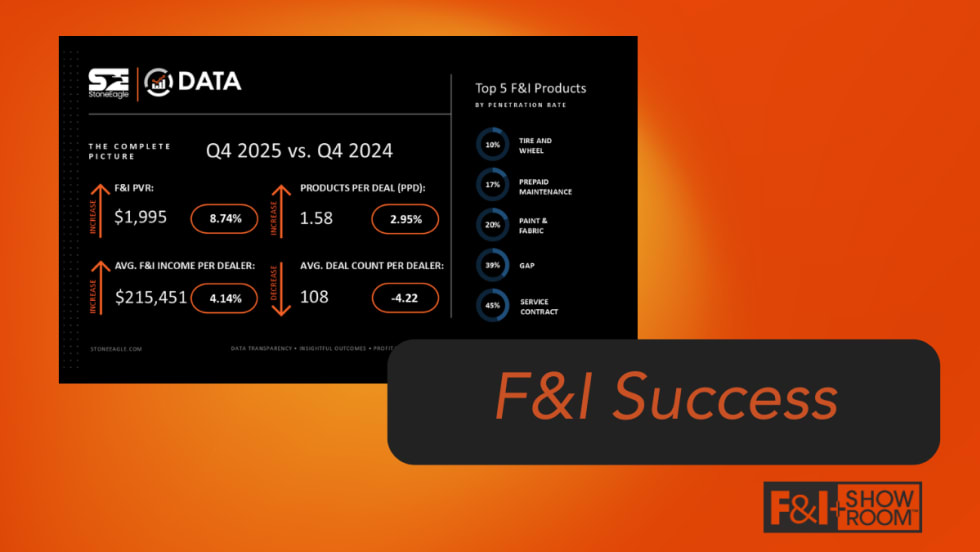
Deal volume ebbed and flowed throughout 2025, but product performance remained steady, according to automotive technology and data intelligence solutions provider StoneEagle.
Read More →
Americans’ view of present business conditions, the labor market and family finances, though, are still in the dumps, and if they plan to buy cars, many target used units.
Read More →
Auto loan originations rose over 6% year-over-year in the third quarter of 2025, but TransUnion predicts a slight decline in auto loan growth this year, making it an outlier in the company's overall lending forecast.
Read More →
A new top 10 list ranks the least expensive for average full insurance coverage on a clean driving record and high driver credit scores.
Read More →
Rob Mancuso – president of Mancuso Automotive – will present a Keynote at the 2026 event.
Read More →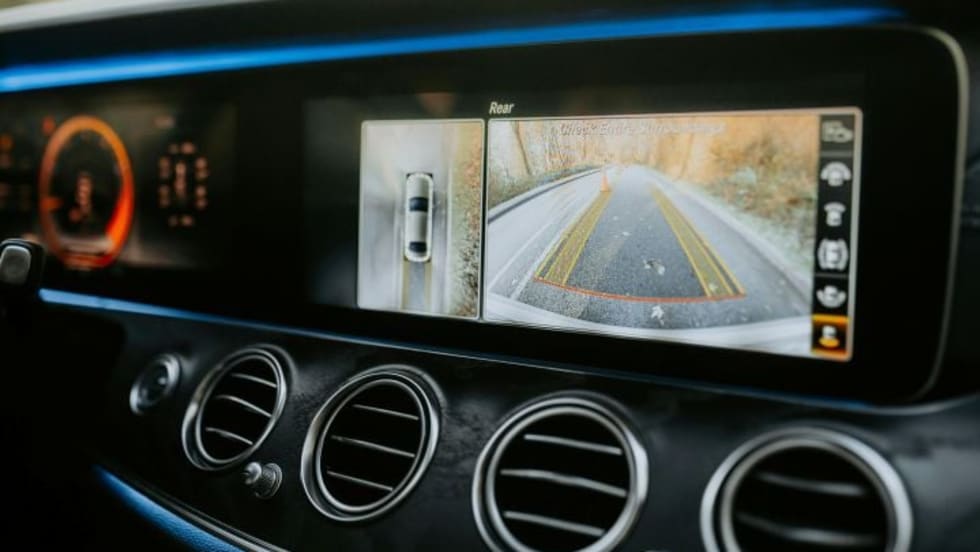
2025 Sedgwick data indicate that the number of vehicles affected fell to its lowest point in more than a decade.
Read More →
Edmunds’ editorial team tested 300-plus vehicles to help determine the Top Rated Awards for 2026, and one brand stood out with multiple rankings, including Best of the Best.
Read More →