Consumers on the fence about switching to greener-fuel vehicles have another reason to consider the alternatives: They’re a lot less likely to be stolen.
Vehicle theft research by the Highway Loss Data Institute finds that electrified vehicles make up half of the 20 least-stolen vehicles in the U.S.
The electrified models’ theft claim frequencies are 85% lower than the average among all vehicles based on the research of claims for 2022 to 2024 model-year thefts.
The affiliate of the nonprofit Insurance Institute for Highway Safety pointed out that many EVs are sheltered in garages or parked near homes and other buildings for charging, discouraging would-be thieves.
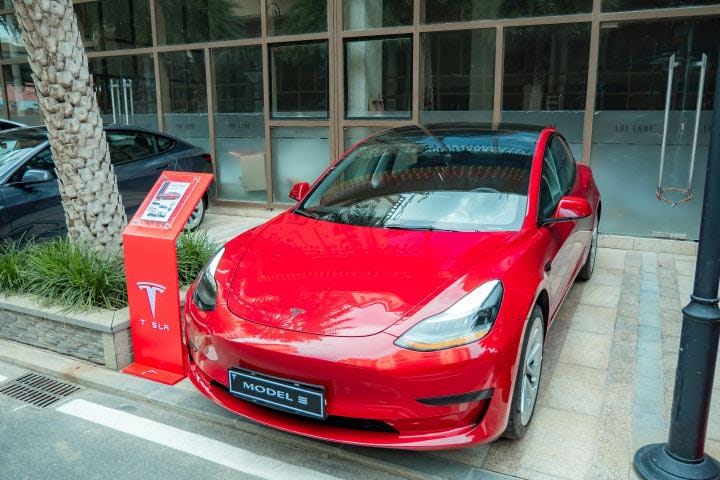
The vehicle stolen the least is the 2022 to 2024 Tesla Model 3 4WD, with a theft rate of 1% of the all-vehicles average.
On the other end of the theft scale are muscle cars and pickups, the most likely to be stolen relative to how many are on the road being the Camaro ZL1. The less expensive Camaro is also on the most frequently stolen list, though at a lower rate than its high-performance sibling. The ZL1’s theft rate is 39 times the average of all vehicles, while the standard Camaro’s is 13 times the average, HLDI said.
Chevrolet ended production of the Camaro after the 2024 model year, though the automaker has said it may be revived in some form.
Horsepower attracts many thieves, though modern horse thieves also tend to be opportunistic, the report points out. The easier to steal, the more likely stolen.
Camaro thefts, HLDI found, spiked in 2023 and kept rising last year, concentrated among 2016 to 2024 model years. General Motors switched to a keyless push-button start system with the 2016 Camaro, and thieves can exploit such technology by cloning a vehicle’s key fob, HLDI says.
This spring, GM publicized a free software update for 2020 to 2024 Camaros in an effort to prevent such thefts.
It’s the same approach Hyundai and Kia introduced in 2023 after a nationwide rash of thefts targeting their 2011 to 2022 vehicles, which lacked standard antitheft technology. About 60% of the vehicles eligible for the carmakers’ software upgrades designed to prevent thefts had received the updates as of December, though, HLDI says. Consequently, the Kias and Hyundias’ theft claim frequencies are about 10 and 11 per 1,000 insured vehicle years, respectively. Those that had gotten the software update had 52% lower theft claim frequencies than those that haven’t.
“This intervention showed dramatic results right off the bat, offering owners some peace of mind,” said HLDI and IIHS Chief Insurance Operations Officer Matt Moore in a press release on the study findings. “Owners who still haven’t gotten the software upgrade should do so immediately, as it’s the best way to protect their vehicle.”