



F&I
The Noisy Year That Tested the Car Deal
A StoneEagle 2025 industry report reads like a stress test. In a noisy year, F&I became the foundation that kept the house standing when the front end thinned.
 MENU
MENU SEARCH
A StoneEagle 2025 industry report reads like a stress test. In a noisy year, F&I became the foundation that kept the house standing when the front end thinned.
A year can lose momentum without losing footing. In 2025, the math of the car deal tightened. Front-end profit compressed, affordability stayed tight, and volume never re-established a clean rhythm amid tariff talk, inventory swings, and electric-vehicle volatility.
Yet F&I outcomes held near record territory, less as a victory lap than as evidence of what remained durable once the front-end cushion thinned.
Entering March, tax season often brings a lift in showroom activity and a little more willingness to commit. Last year, that lift arrived alongside tariff talk that pulled purchases forward, and March became the year’s high-water mark across multiple lines:
But the spike did not become a baseline. The rest of the year revealed what actually held, a view drawn from “The Complete Picture” report highlighting benchmarks from StoneEagleDATA. The report is based on transaction-level data representing over 50% of the automotive retail market.
StoneEagle
Outside of March’s 131-deal spike, monthly volume ranged between 101 and 120 deals per dealer, clustering largely in the low- to mid-110s. December closed at 111, down modestly year-over-year but far from a collapse.
The year’s two visible lifts came early and midstream. March reflected tariff-driven pull-forward demand. Late summer showed a smaller bump as EV credit dynamics shifted. Beyond those moments, 2025 deal counts tracked closer to pre-surge norms than to the post-pandemic peak years, when monthly averages reached into the 140s.
What stands out is the contrast: While deal volume settled back to typical levels, total F&I income per dealer remained notably elevated. That average peaked at $243,598 in March and finished at $219,056 in December. Throughout the year, income consistently outpaced prior cycles, even as volume aligned with historical norms.
Volume normalized, and back-end profitability remained elevated. That divergence sets the stage for the rest of the story.
The contrast sharpens on the sales side. As volume stabilized around historical averages, front-end gross moved decisively lower, underscoring the diverging paths of volume and profit sources.
Front-end gross averaged $685 per deal in January, peaked at $988 in April, and declined through year-end, closing December at $279, down 52.39% year-over-year. Total gross per deal followed a similar arc, dropping from $2,883 in April to $2,253 by December.
Placed over a longer context, average front-end gross in 2025 sat 31% below 2019 levels. Over the prior 12 months, front-end gross declined by 59%. Over a 24-month span, it was down 71%. From the post-pandemic peak in January 2022, the drop is roughly 90%.
That compression tells the affordability story of 2025: dealers giving up front gross to make deals happen.
And the unwind is particularly visible in new vehicles, for which front gross fell from $1,106 in January 2024 to $53 by December 2025, close to the pre-Covid baseline, when new-vehicle front gross routinely ran negative.

2025 F&I outcomes held near record territory, less as a victory lap than as evidence of what remained durable once the front-end cushion thinned.
Pexels/Pixabay
As the sales-side cushion narrowed, more of the profit originated in the F&I office.
The fourth quarter was the strongest stretch of 2025 for F&I profit per-vehicle retailed. After opening January at $1,812, F&I PVR climbed steadily throughout the year, crossing $2,000 in November at $2,025 before settling at $1,975 in December. The fourth-quarter average of $1,995 was the highest quarterly result of the year.
The quarter followed a typical seasonal pattern, with a slight slowdown in units compared with the prior quarter. Even so, it delivered the year’s strongest F&I PVR.
That strength sits inside a longer arc. From January 2024 through December 2025, F&I PVR increased 14%. Compared with January 2019 levels, it stands roughly 58% higher. This was not a single hot month. It capped a multiyear productivity climb.
Penetration trend support that reading. November delivered the year’s highest service contract rate at 46% and GAP at 40%. Both closed December above prior-year levels. Products-per-deal peaked at 1.60 in November and finished the year at 1.56, up from 1.52 in December 2024.
By December, nearly nine out of 10 gross dollars per deal originated in the F&I office.
The composition of that income matters.
Vehicle service contracts remained the primary driver, accounting for 54% of F&I product profit. GAP followed at 12%.
But the most notable structural shift over the past several years has been the expansion of ancillary products, which now represent roughly 34% of total F&I product income, up materially from prepandemic levels.
That growth did not come at the expense of core products. Service contract and GAP income both increased year-over-year. Instead, ancillary categories, such as paint and fabrication at 19.78% overall, prepaid maintenance at 16.01%, security at 14.97%, and tire-and-wheel at 10.35%, expanded the revenue base.
The steadiness what stands out. Paint-and-fab remained the most consistent ancillary anchor across the year at roughly 19% to 20%), while prepaid maintenance climbed to 17% in December, and tire-and wheel held around 10% to 11%.
Across transaction types, the ranking shifts in telling ways.
On finance deals, the top ancillary attachments were paint-and-fab at 22.22%, prepaid maintenance at 18.90%, and tire-and-wheel at 12.24%.
On lease transactions, paint-and-fab at 21.89% and prepaid maintenance, at 17.78%, stayed strong, with security rising into the top tier at 15.13%.
On cash deals, when rate-linked products can be a tougher fit, ancillary still found traction through paint-and-fab at 12.47%, security at 10.05%, and prepaid maintenance at 7.72%.
In short, income growth was not dependent on one product category or one quarter. It reflected a broader mix that matured across finance, lease and cash transactions.
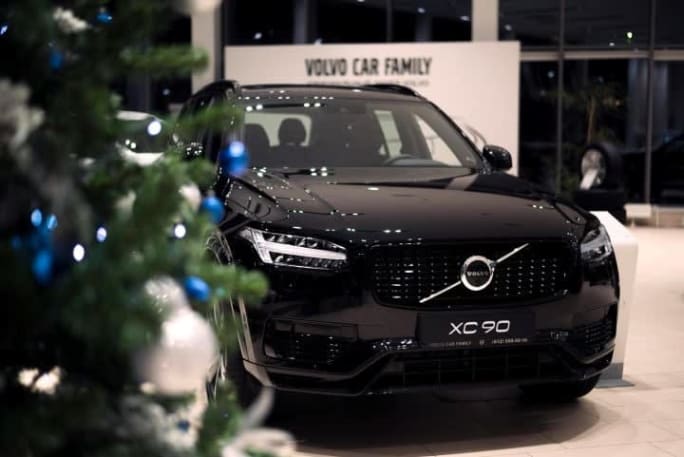
Last year, the math of the car deal tightened, dealers giving up front gross to make deals happen. The unwind was particularly visible for new vehicles.
Pexels/Vitali Adutskevich
The cleanest read on 2025 is the income line. June was the low point for average monthly total F&I income per dealer at $205,363, and the year still closed at $219,056.
That spread matters because it shows structure, not volatility. In a year that felt loud in the moment, the business office operated within a relatively narrow band and finished strong.
The full-year view reinforces this: Average total F&I income per dealer finished at $215,822, up 7.31% over 2024. The fourth quarter averaged $215,451 per store, up 2.95% year-over-year. This wasn’t a couple of hot months but a sustained annual run rate.
That’s where the “noisy year” framing lands. Tariff talk, inventory swings, EV questions, and rate concerns were all in the mix, but results did not fracture under them.
As front-end margins compressed, F&I became the stabilizer, not as a storyline but as a structural reality in the year-over-year snapshot. The F&I office carried the clear majority of total gross, showing what durability looked like when the front of the deal was doing less of the work.
“The Complete Picture” of 2025 shows normalization on the front end and steadiness in the back. In a year when momentum faded, steadiness mattered more.
Loading data...
F&I
A StoneEagle 2025 industry report reads like a stress test. In a noisy year, F&I became the foundation that kept the house standing when the front end thinned.

Industry
Several automotive industry experts offer their advice on establishing an agency and building it to your highest potential.

Industry
As America turns 250, explore how the automotive industry shaped jobs, culture, innovation, and mobility from Detroit assembly lines to today’s EV era.