It pays to follow a process and avoid the temptation to cut corners on preparation.
Hoss Devine has a few tricks up his sleeve when it comes to finance-and-insurance sales, at least 10 of them, to be exact.
The founder and CEO of Kansas City-based Automotive Innovations frames those tricks around the people component, that is the customer. It helps that he majored in psychology in college, and he’s adapted that interest to help him and clients strengthen their F&I sales approach.
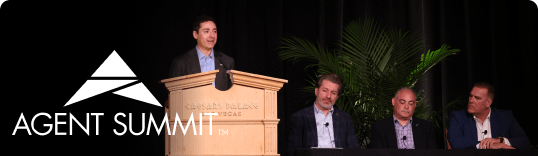
“It’s all about people,” he said when he spoke at Bobit’s recent Agent Summit on how to maximize F&I sales by empowering finance managers. “I think (it’s) probably the thing we don’t pay attention to the most in our industry.”
Finance managers should understand individual customers they work with in order to build an essential rapport and know their “default setting,” he said.
“You have to understand and train people to pick up cues to find out how people are wired.”
So the top of his top 10 tips centered on a slice of that wiring.
Generational Divides
Devine pointed out a fact everybody in his audience in Las Vegas already knew: “Today in the car business, we have the most diverse workforce we’ve ever had,” from baby boomers to millennials and generation Z. So he said it behooves finance managers to get to know them all in order to understand them.
“Every time I go to a dealership, I hear people complain about millennials. Millennials are actually pretty cool once you get to know them, but you have to understand how they’re wired.”
Though millennials currently make up more than a third of the U.S. workforce, generation Z is gaining, he said, pointing out that digital natives like them, even as children, gravitate to digitally based social interactions.
“They want human interaction but only when they want it.”
Devine recommended that dealerships dig into data on the generational mix of their incoming customer base so they can train F&I and their other sales staff to work with those cohorts’ tendencies, needs and preferences. Conversely, younger F&I managers should be trained on how to engage with older generations and vice versa.
“You have to figure out how to train those people to talk to an older person and get them to make a decision without them thinking they don’t know what they’re talking about.”
Equal But Separate
Devine emphasized what he considers an essential characteristic of dealership structure – separation of the sales and finance processes.
He meant that the finance office should avoid negotiation.
“What do you think happens to the momentum of a deal,” he asked, if the finance manager sits with a customer who starts trying to negotiate the price or trade of a deal.
Furthermore, a solid turnover is essential, he said.
Time on Their Side
Of course, most all of us have waited at least somewhat impatiently in a car dealership to get the red tape behind us so we can drive home in our new vehicle. Devine said finance managers should intentionally manage buyers’ expectations around that wait time.
“How many times have you heard salespeople tell a customer they’ll have them out of there in five to 10 minutes? he said. “As soon as it goes past 10 mins, they’re like, ‘Hey man, I’ve got to get out of there.”
Instead, he said the finance manager should establish for the customer approximately how long the paperwork will realistically take, even using an appointment scheduling tool to give them a visual cue for the expected time commitment.
“I’ve spent 25 years in retail, and when I set an expected time, I’ve never had anybody back out of a deal or not buy the car,” he said.
The finance manager can also reassure the customer it’s time well spent because it will help them understand every document they sign.
If the customer is still adamant they can’t dedicate that much time, Devine said the finance manager can offer to schedule a later slot.
Q&As
Talking about time, Devine said some finance managers resist conducting customer interviews, saying they don’t have it.
“I’ve had our clients call and say, ‘I don’t want to do an interview. Can you turn that feature off?’”
Devine, though, calls it a “customer needs analysis” that helps find common ground and establish trust.
The finance manager can even text an interview to the customer if that’s their preference, he said.
“If you don’t know the customer’s wants and needs, it’s really hard on the fly … Your finance managers aren’t as good actors as they think they are. Do you think people know if you’re prepared or not prepared?”
Selling should be conversational, he said, and that requires specificity, not interrogation-like exchanges of rapid-fire questions and answers. And the trust that’s built with the former style is essential in sales.
Authority on the Subject
The next tip took up the fewest minutes in Devine’s talk but was one of the most important of the 10 and perhaps the most self-evident, therefore the brevity.
“Finance is one of those things where you have to be an expert,” he said. “We have to be the authority.”
That’s because a sense of authority translates to confidence on the part of the customer in what the finance manager says, in addition to enthusiasm about the information, Devine said.
Processing
The step of following a trusted sales process connects to all the others, he explained, because they’re all interdependent.
For instance, “What’s the strongest close there is? It’s, ‘You told me.’ If you don’t do an interview, how can you talk to them about what they told you earlier to help them make the right decision? Gather all the information you can.”
Meaning that knowing as much about each customer as possible gives the finance manager the greatest chance of closing that person on the products he or she presents for consideration.
Paint a Picture
Since vehicle coverage options confuse the typical automotive consumer and different people process information differently, Devine said, doing everything possible to help customers visualize features helps cut through the fog.
A chart or the like can eliminate ambiguity and confusion, which is a must because a confused customer will refuse products, he said.
“One of the things that made me very successful was I drew some type of graph to visualize for the consumer so they could understand what I was talking about,” he said of his F&I sales days. “Just because we understand coverage doesn’t mean they’re going to understand it.”
Tell Them a Story
Similarly, customers tend to more readily take in information presented in a narrative form than they do facts ticked off like a laundry list. Combining storytelling with the above-mentioned visuals can pack even more power to a presentation, he said.
Examples include a story about spilled coffee in a new car or the complexity of a seat belt tensioner to illustrate the wisdom of obtaining coverage for future unknowns.
“I’d dump diet Coke in a car with a tan interior,” Devine said. “I’d say, ‘Watch how it beads up,’ wipe it, and say, ‘Don’t you want that kind of protection for your car?’ You know what happens when you do that? They buy it.”
Shortcuts that cut out steps like that can forfeit sales, he said.
All or Nothing
Consistency is the finance manager’s friend, Devine continued. One thing that should be done in the F&I office is what he calls the 300% Rule: Present 100% of available products 100% of the time to 100% of customers.
“I don’t know how many finance managers I see that pick and choose what they show a customer,” Devine said, explaining that many tend to predict what someone will or won’t buy just by their appearance.
He told the story of his first automotive sales job when he was 19. As a customer waited, Devine’s boss showed him a “four-square” containing his trade-in vehicle value, new vehicle purchase price, down payment and monthly payment.
“My eyes got big as saucers. I said, ‘He’s not going to pay that.’”
Devine nevertheless presented the four-square to the customer, who responded. “‘Well, if I put $7,000 down, can you give me $800 a month?’”
Practice, and Practice Again
An invaluable habit that all finance managers should employ, Devine urged in conclusion, is role-playing sales presentations with colleagues. In fact, he put it first in importance of the 10.
Even veteran professionals shouldn’t rely on their experience, though most dealers do so, he said. Devine learned the hard way himself when, confident in his sales skills, he tried to get a sales manager job at the biggest Ford dealer in his state. But he was stumped when the general manager asked the young applicant to pitch him.
“I locked up. I stammered,” he said, and the manager stopped him halfway through, saying he could sell cars for him instead if he wanted. Devine, seeing he could learn from the man. He took the job to gain another mentor in the business.
“I never got stumped again because I knew this stuff like the back of my hand. Role-playing is how you build rapport and build trust, not only in the process but in the product, and it allows you to never get stumped.”