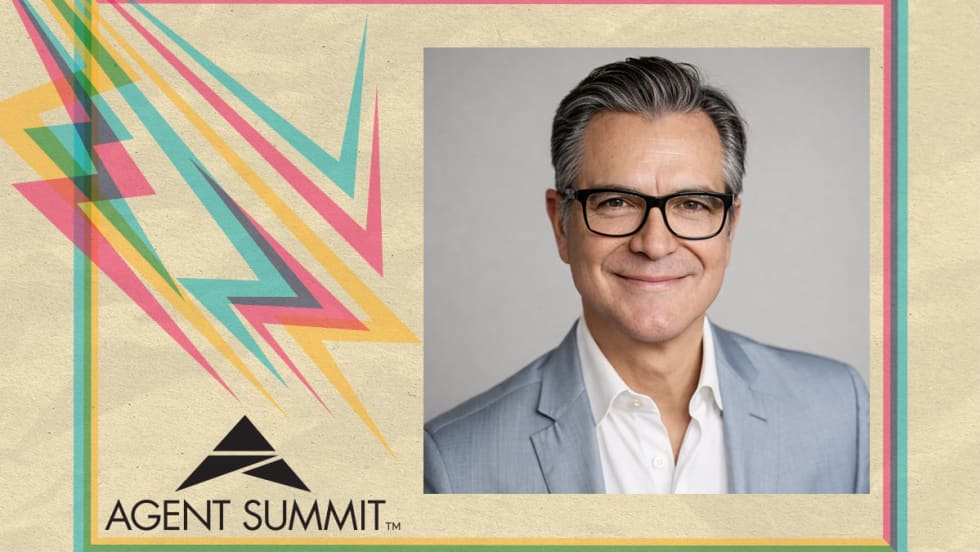
Careful thought about what’s driving your business will put you on solid ground as it grow, industry veteran Ron Reahard advises.
Ron Reahard used to own a basset hound named Simon. It paired with a pet black cat named Garfunkel – he doesn’t remember which animal came first, but that’s immaterial.
The material part is an object lesson the finance-and-insurance training firm president drew from Simon’s canine-style loyalty.
When Reahard would return to his home in Tennessee from any of the many auto dealerships his Reahard & Associates serves, Simon would emerge from the garage as soon as his master hit the button to open the overhead door.
“It didn’t matter if I’d been gone two days or two weeks,” he recalled.
The dog would follow the car inside, its tail enthusiastically beating against the body in welcome until it came to a stop and Reahard got out to reward the pup with a pet.
Simon’s steady attentiveness later struck Reahard as a valuable analogy to share with both auto dealers and the agents who serve them: the six “hounds,” as he calls them. He metaphorically “released” those hounds at the recent Bobit Business Media’s Agent Summit for agents’ benefit.
The hounds – why, who, what, when, where, and how – can guide any agency owner in developing a business plan that leads to long-term success, Reahard says. He should know – he established Reahard & Associates in 2001 and had a record year of business last year.
He explained how to answer his “hound” questions for maximum clarity to help build or strengthen an agency. The most loyal dog will eventually die, he points out, but a sound business plan based on the concept will last for the life of that business.
Why?
The six-hounds process should start with the lead hound, Reahard recommends: the why.
An agent should ask himself why he wanted to start his business in the first place, and that shouldn’t rest on money. The reason, Reahard explains, is that money alone won’t be enough to capture the buy-in and loyalty of a team any business owner would want to rely on.
The why, or the business owner’s vision, should be something that others will want to sign on to for the long haul.
“It’s only when your team embraces that value and that vision and wants to carry it forward will your goals and vision become a reality,” Reahard says.
He used the formation of Reahard & Associates as an example of his philosophy.
“One of the reasons our company has been a success is our vision. My goal, our focus, is improving the car business, making it better, specifically in the area of F&I,” he says. “I love the car business. Some of the finest people I’ve ever met in my life are car dealers.”
The problem as he saw it at the time he started Reahard & Associates in a two-bedroom house was the negative experience he noticed many people had of the car-buying process. That stung him, because he’d built his career on the car business.
“There’s too many people who had friends and family say, ‘I hate buying a car,’ so I wanted to change that. I feel like I want to walk away knowing I made this business better.”
Who?
The who part is closely related to the why and really where the why stems from. Who are you as your agency’s owner and leader, and what are your core values?
The latter should set your agency apart from others and should be highlighted in your marketing, Reahard says.
Based on his own values, he set his training firm’s values as honesty and integrity, continuous improvement, delighting customers, sterling reputation, and close attention to detail.
And after Reahard established those values, he sought team members they resonated with and who lived out those values.
What?
To answer the what question, the agent should simply embrace his or her “why” and “who” and believe in them – basically what they offer to dealer-clients.
Finding a niche to distinguish what the agency provides from competitors’ offerings, identifying what the agency does to help dealers, and pointing out how its products are superior to other agencies’ are key steps to take in an agency’s infancy.
“Identify what makes you different,” says Reahard, who points out that products and services don’t necessarily need to be the latest and greatest but simply unique to the agency.
“Make sure there are one or two things that you do exceedingly well.”
Along with setting the agency itself apart, the agent should work on helping her team members improve over time through training and feedback. That ongoing effort will also strengthen the agency’s profile among clients and potential clients.
When?
The when will depend on the business, the right time to start it and the right market to establish it in for optimum results. There are many variables that can influence an individual entrepreneur’s decisions on those two considerations.
Once a business is established, goal-setting should be built into business planning, Reahard recommends. There should be one-, five- and 10-year goals to guide the layout of steps to reach them.
With goals to target, each team member has a particular finish line in view and can therefore maintain the focus and commitment needed to reach it.
Where?
Buying into a business philosophy is one thing, but getting sustained buy-in from a strong team is another, Reahard realized, and that belief gives him the perspective of his company being the entire staff’s. That’s why he uses the words “our” and “we” a lot.
The question is how Reahard achieves that commitment to the firm’s vision.
“There obviously has to be a reward for them,” he says. “We had a record year last year, and everybody got a record bonus. … I want to make sure that our clients and their customers are taken care of.”
Each month, Reahard team members are compensated based on their results as measured by company financial returns.
“You get paid what you’re worth,” Reahard says.
A second and related way to keep a team on task is to hold each member accountable for his or her role responsibilities. To do so his firm tracks its results, because what is measured changes over time.
“If we don’t meet targets, we identify, discuss, and try to resolve that issue,” he says. “When you track effort, effort improves, and when effort improves, performance improves, and when performance improves, profit improves.”
Reahard realized recently that he’d failed to communicate his own “where” to his clients and employees, some of whom had started asking him about his end goals for the firm after he turned 65.
“That was a mistake on my part,” he says. “I wanted everyone to know I’m not selling the company … Even after I’m gone, I think what we’ll do as a company is important … I want this company to continue,” he says. “I had to answer that question for myself.”
And so does every agent. “Where are you headed as an agent?” he says. “What’s the target?”
How?
An instance of target tracking that’s helped his firm build business involves tracking its customer reviews on Google, a closely followed business metric today in many industries. By tracking and then seeking more reviews, it recently doubled the volume of feedback to about six reviews per week.
Reahard & Associates also video-records F&I transactions as a teaching tool for its clients, accumulating more than 20,000 videos per month. It sits with F&I managers to review their performance and coach them on how to improve for better sales results.
“We did a training with an F&I manager who said ‘right’ 86 times,” says Reahard, who acknowledged he has his own vocal tick. “My favorite word is OK.”
Holding up a mirror of sorts to the manager helped him see what he was formerly unaware of and start to pare down his speech in customer interactions for stronger impact.
Such a value-adding service amounts to the how of Reahard’s six hounds. The tangible results the firm offers clients both help its customers and Reahard & Associates build business.
“It’s like the tagline for our co. that we started with and still have on our materials – delighting customers, increasing profits at your dealership,” Reahard says. “The most important part of that is delighting customers. They have to see a return on their investment in our training.”
In the same way, agents who delight their dealer-clients will build strong agencies.
“The primary purpose of every business is to help customers – or become better at helping customers,” he says. “The more value you bring to the table, the more money you’ll make as an agent.”