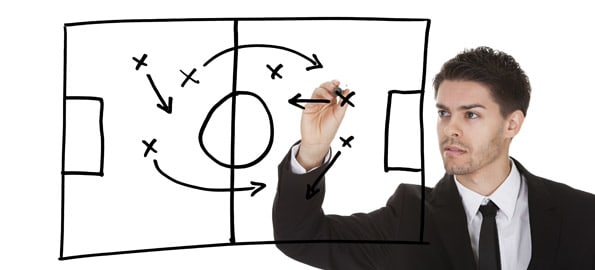
To the uninformed spectator it may look like professional football players have it easy. Play a game every week for a few months and make big bucks. But professional NFL Players are on the practice field 24/7. And when they’re not on the field they’re watching game film. These pros are the best of the best or they would not be where they are. Do they really need to practice and watch game film (training) when they have been running these same plays week after week for years?
Yes, for one simple reason: They play to win and it takes practice, practice, practice (training) to make sure they do. That’s what makes them better today than they were yesterday or even 20 years ago!
Given this proven concept, why do we, in our industry, either put training on the back burner or choose to not formally train our people at all - leaving the training to the untrained sales manager?
Because we are too busy - or maybe we are not busy enough. Or, perhaps we have sent our people to training in the past but we didn’t get the results that we had hoped for – the training was ineffective. But maybe it’s not the training that’s ineffective.
Training is not an event, a one-day activity that will change everything. It’s an ongoing process – day-to-day, week-to-week, month-to-month, and year-to-year. We practice every day, not just when we are in front of a customer on game day, but more importantly when we are not in front of a customer. We want to be practicing (training) when we are not in front of the “opponent.”
Why? It’s simple: We stand to lose if we have not practiced the execution of the play – through training.
With all of this in mind, let’s discuss the key elements of training and what makes training - or practice - most effective.
The Kickoff
First we need to establish the foundation. To use Vince Lombardi’s phrase when kicking off the first practice session of every season, “Gentlemen, this is a football.”
Before a training session takes place, you should have constructedyour process. In other words, you should have partnered with your training company and “white boarded” your process. By building your organization’s process with you (dealer principal) and your management team, you create “buy-in.” The process is yours, not some generic process. As a result, you and your management team take ownership of it.
Your process needs to be in writing. For example, if it’s a Road to the Sale process, you need to have it in writing and each and every individual has to have, using the NFL analogy, a copy of the “playbook”.
Once you have built your process, it’s time to have your trainer facilitate the training. Using TRAIN as an acronym, there are five key elements to effective training.
T - Train/Teach the Curriculum
One of the best methods of training is the guided discovery method, which is designed to create the “why” before teaching the students the steps to the sale and/or word tracks. If students, especially those who have experience, don’t understand the “why,” they will not buy into the new process.
Rather than have the trainer do all of the talking, encourage interaction from the participants. Before getting into the “steps to the sale” or “objection handling,” we need to allow the students to discuss, in an open floor environment, their “average customer” and the challenges and impediments to their performance. Once they are aware of and have discussed in a public arena their challenges, they want to know what the solutions are. The training course will provide those solutions. It’s called the “tell me more factor.”
There are a lot of great trainers out there who do all of the talking - the “stage show” approach - but there is little to no interaction with the audience. As an example, the trainer will role-play a given sales situation and impress the audience with his or her performance. However what the trainer or training program did not allow for, was for the student to learn, practice through role-playing and replicate the performance. This learning environment is not conducive to retaining the material. The training program should allow for the participants to role-play the presentations. As an added retention component, record each individual’s presentation and critique the video of it afterwards.
R - Repeat, Retain
Training should be conducted daily, weekly, monthly. No excuses.
Once the initial event (training session) has occurred, the most successful dealers have weekly training with videotape role-play and critique. When a dealer invests this time in his or her employee’s success, it has two very favorable results:
The process is followed by all and the customer experience is positive.
Employee turnover is minimized. Employees feel valued and morale is increased.
A - Accountability
If employees aren’t held accountable to follow your process, the training will be ineffective.
If you are going to invest in the training of your process and then not hold people accountable to follow your process to the letter, you have wasted your investment of time and money. It’s easy to let the “highest unit” sales person do it their way, versus doing it your way. Once this occurs it creates a domino effect. If you let your “big producers” break the rules, the end result is there are no rules.
I - Inspect What You Expect
If you don’t inspect your people’s presentation performance and instead base your evaluation solely on their sales numbers, you have again wasted your training investment. Have your people role-play any given sales situation “on the spot” to allow you and your managers to evaluate the sales persons’ or sales managers’ effectiveness.
N - NEVER STOP TRAINING.
Keep the process going. NFL Players are not just experienced, they are polished. It’s all about training. And more training.