What a fast-food chicken chain taught Ritch Wheeler about training.
Ritch Wheeler worked in fast food as a teenager, so an elevated drive-thru experience he had after he became an adult and developed a successful automotive career stood out to him.
The founder of Texas-based Eagle Training Academy noticed Chick-fil-A employees who interfaced with the fast food-eating public had an approach that eclipsed their teenage peers at a very well-known burger chain. They were particularly professional, engaging and polite.
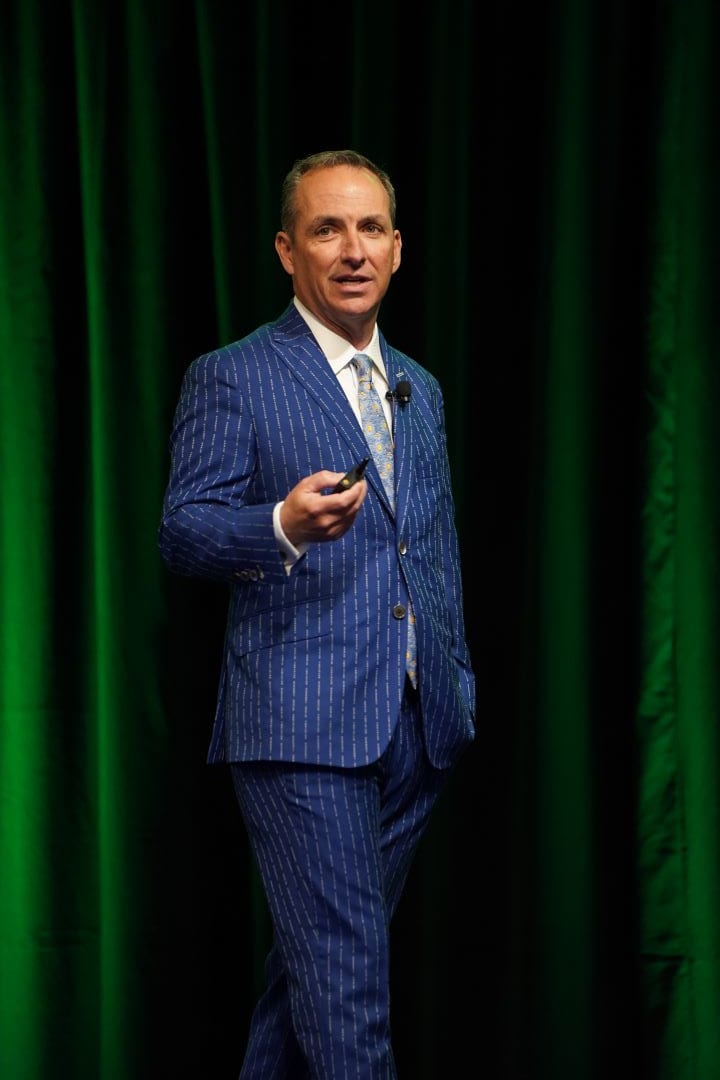
“They’re all hiring the same high school kids,” he told agents and others who attended his talk at Bobit Dealer Group’s 2024 Agent Summit. “The difference is they’re looking for a coachable person, somebody who wants the structure, the training.”
Wheeler homed in on that last point to frame his talk around. After all, he built his business on training because he believes in its power to transform auto dealerships.
“Our dealers want the Chick-fil-A experience,” he said. “Your agency should be leading the charge on that, and not just in F&I.”
Training can also make a difference in other departments, including the service drive, said Wheeler, who advocated creating “a culture of training in our dealerships.”
Disruptive Dynamics
He said dealership table stakes are one thing to start with and should include best-in-class F&I products – “You can’t have to apologize for F&I products every time you walk in a store” – and participation options.
But if preparation for the market stops there, “you have a target on your store,” said Wheeler, who used to hit up dealerships to take away other agents’ business.
He advocated that agents instead act as dealership disruptors, using a layered approach to win business.
“A lot easier conversation is, ‘Can I have a 30-minute sales meeting, give your sales staff a nugget that will help them a little bit?’ Most dealers say yes to that.”
Then the agency can offer to conduct a store evaluation and provide customized staff training on any areas of opportunity or strength it identifies.
“That’s a lot easier conversation than, ‘Let me change your wealth-management strategy,” Wheeler said.
Training To-Dos
An agent might not be able to offer training in-house but should have the capability to connect dealers with it, he said.
Low-hanging fruit to start with can include:
Sales training, both in person and online
Service training with a “true service process”
Compliance training for F&I and beyond to ensure stores have formal programs to keep them safe
He particularly emphasized the last one because fumbling compliance can have such damaging repercussions.
Wheeler, a local-government politician on the side, currently as a county commissioner, said his peers in neighboring counties regularly meet to compare notes.
“Attorney generals do the same thing,” he said, urging his listeners to ensure their dealer-clients establish and maintain strong compliance programs that they train employees on.
The next level of training beyond those basics includes categories like:
Your Order in Five
Back to Chick-fil-A, which though it represents an entirely different corner of the retail world, serves as a clear example of sound training’s effectiveness. Dealerships need a similar “culture of training,” Wheeler said.
He pointed to his experience some time ago at a Chick-fil-A that left him with much more than a chicken sandwich and some waffle fries. He actually came away from the restaurant impressed with a few teenagers.
“I’m dying to find out more about their training program,” he said.
Wheeler compared that particular fast-food run to a typical visit to the earlier-mentioned burger chain, where he said it’s rare for a request as simple as “no onions, please,” for instance, to be fulfilled.
Chick-fil-A has “created a culture of continuing education at their organization,” he said.
Wheeler laid out a five-step program to guide agents in doing just that for car dealers:
1 - Hire Coachable People
Like Chick-fil-A, dealers should be intentional about choosing their employees, he suggested.
“What does your job posting look like? Does it mention training? You have to have that verbiage in the posting. What does the interview process look like? If you have a mission that can be accomplished by a specific employee persona, then reverse-engineer the hiring questions.”
Many dealers don’t build such things into their hiring processes, and that shows in the industry turnover rate, Wheeler said.
“There was a 90% turnover rate for first-year sales associates in 2021. Seventy percent of employees who say they had a good onboarding experience were still there three years later.”
It might be tempting to gloss over new employees’ first days on the job, but Wheeler advised that dealers should take pains to make their entry memorably inviting.
“Make the first day great,” he said, suggesting ideas such as a welcome wall board “Make sure there is some training on day one – set the tone.”
Having a mission to inspire prospects and existing employees can be powerful, Wheeler said, using the example of his own firm, the eagle theme giving the impression of a place people can learn to “take off” in their careers.
2 - Create a Course Catalog
Establishing a set of courses for employee training that includes all managers provides structure for the continuing education that’s so crucial to a successful sales staff, Wheeler said.
He recommended that training subject matter extend beyond simply the employee’s function to round them out as professionals.
“Topics don’t all have to be about the car business,” he said. “It’s an opportunity to teach them things far beyond just the car business – business etiquette, time management.”
And dealer-clients shouldn’t allow business to crowd out the most essential element.
“Most importantly, start with the human at the center of the process,” Wheeler said, “not the production” because today’s younger workers won’t have buy-in if they feel like a number. “Production will fall in later.”
3 – Instill Continuing Education
Automotive retail doesn’t do a solid job of helping professionals define and execute on clear career paths, Wheeler said. To help change that, he suggested that agents help dealers incorporate a job shadowing program for employees to meet with top performers and learn from them.
4 – Build in Accountability
Without accountability, training can fail to achieve the desired end result. That means employees should be compensated according to the training credits they earn to motivate them to stay up-to-date, Wheeler said.
For instance, a pay plan could reward bonuses for a set number of accumulated training credits. The same type of structure could be developed for time off work. Employees could also be allowed to manage their own work schedules if they meet training requirements.
“They’ll see, ‘If I buy into the process, the process is going to buy back into me.’”
5 – Reward Training Performance
Many people feel motivated by the proverbial gold star. Wheeler described the modern version of such rewards as “gamification,” or badges or other types of recognition. He said younger generations particularly like these.
“Come up with something fun.”
After all, those Chick-fil-A cashiers certainly seem like they are.
Hannah Mitchell is executive editor of Agent Entrepreneur. A former daily newspaper journalist, her first car was a hand-me-down Chevrolet Nova.