A new brand-level Consumer Reports “report card” is designed to help consumers choose vehicle models.
The data combines the organization’s road test scores on more than 200 new vehicles; reliability and owner satisfaction survey results; and safety performance for a ranked Automotive Report Card that includes recommended new and used models by brand. The data can be sorted by power train type, drivetrain and number of seat rows.
“Our new experience at CR.org makes that research easier by presenting exclusive unbiased data and insights on everything from reliability to cost of ownership in a streamlined way that’s simple to navigate,” said Jake Fisher, senior director of Consumer Reports’ Auto Test Center.
In the reliability slice of the report card, a factor Consumer Reports has tracked for years and bases on each model’s reliability for the previous three years, Subaru topped competitors for the first time and was also named the No. 1 overall brand for the first time since 2022.
The automaker wrested the reliability distinction from Japanese competitors Lexus and Toyota after the two had traded the top spot for years, Consumer Reports said. This year, they’re second and third, respectively.
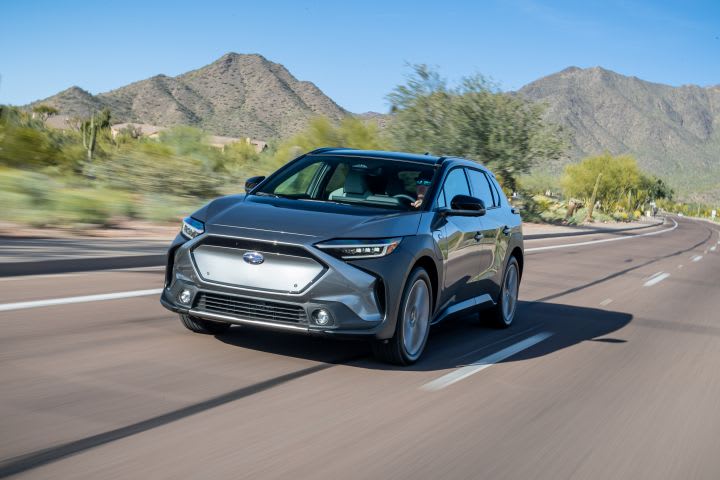
Subaru climbed to the top by virtue of its “conservative” vehicle redesigns, says Consumer Reports, which believes maintaining tried-and-true components throughout its lineup gives Subaru models their reliability. Only one of the brand’s models was given a below-average reliability score: the electric Solterra SUV.
In fact, purely electric vehicles and plug-in hybrid EVs are still scoring lower than gas-powered and hybrid models on reliability, though overall they’re quickly closing the gap, the report found.
On average, EVs have 42% more problems than gas-powered models, a big drop from 79% last year, while PHEVs have 70% more problems, compared to 146% more last year.
“Today’s hybrids deliver reliability that is similar to conventional gas cars despite their added complexity,” Fisher said. “CR’s tests have shown that they’re also often quieter, quicker, and more pleasant to drive than their gasoline-only counterparts.”
Consumers have been scooping up more hybrids as they’ve proven slower to adopt pure EVs, hybrid sales rising 53% last year to a new high of almost 1.2 million, the U.S. Department of Energy reported.
DIG DEEPER: Two Brands Repeat Again in Residual Value Awards