


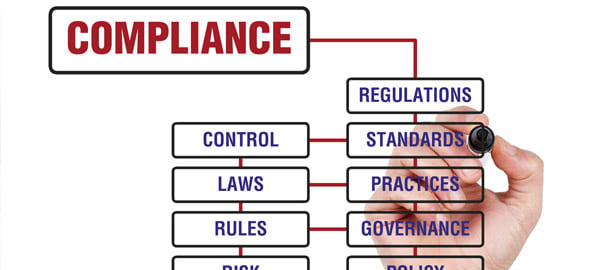
You may have heard of the term “CMS” and wondered what it meant. In the context of regulatory compliance, it stands for “compliance management system.”
A CMS provides dealership management with a systematic framework for compliance, from cradle to grave, in the lifecycle of products and services subject to supervision by the Consumer Financial Protection Bureau (CFPB).
A properly designed CMS will establish responsibilities and lines of communication and ensure compliance is “baked into” business processes. It will also provide a mechanism to review proper execution and to correct problems. A CMS represents “best practices” for dealers, and should help lower the risk of violating the law and harming consumers.
Agents can do their clients a great service by introducing this concept and taking an active role in building each dealer’s CMS. Let’s take a closer look at why these systems are so important and how they are designed.
F&I Under Fire
The CFPB does not have direct oversight over new- and used-vehicle dealers under certain circumstances. More particularly, dealers are exempted if they meet two requirements: first, they are predominantly engaged in the sale, lease and servicing of motor vehicles; and second, they routinely assign retail installment sales contracts to third-party finance entities.
On the other hand, “buy here, pay here” (BHPH) dealers, who own their own finance companies and do not routinely assign retail installment sales contracts (or retail leases) to unrelated finance entities may be subject to CFPB authority. The same is true for dealerships that do not have a service department.
Keep in mind that the CFPB has jurisdiction over auto financing at large banks, credit unions and affiliates with assets of more than $10 billion dollars. The CFPB has also revised the definition of “larger participants” to include any nonbank auto finance companies (e.g. captive finance companies) that make, acquire or finance 10,000 loans or leases in a year. The CFPB estimates that these nonbank auto finance companies originate 90% of all nonbank auto loans and leases.
The CFPB also has jurisdiction over indirect lenders under many laws such as the Equal Credit Opportunity Act (ECOA), unfair or deceptive acts or practices under Dodd-Frank, the Truth in Lending Act (TILA), the Consumer Leasing Act (CLA) the Fair Credit Reporting Act (FCRA) and the privacy of consumer financial information standards set by the Gramm-Leach-Bliley (GLB) Act, among others.
The ECOA generally makes it illegal for a lender to discriminate on any prohibited basis, including race, color, religion, national origin, sex, marital status and age. ECOA issues can arise in dealer-arranged financing when the dealer has the opportunity to increase the auto loan interest rate above the rate quoted by the indirect lender, typically referred to as “markup” or “dealer reserve.” The ECOA risk is that the markup is illegally based upon prohibited factors. So while there is a carveout for dealers as described above, the CFPB can and does still have the very real ability to supervise and affect dealers and their businesses.
CMS Essentials
Now that you have some idea about the extent to which the CFPB can affect business on the dealership floor, your dealers still may ask why they need a CMS. The short answer is that the CFPB says so and it makes good business sense. A CMS demonstrates a commitment to compliance with applicable consumer protection laws. If that doesn’t convince your dealers, remind them that a customer who feels they have been treated fairly makes for repeat business and referrals.
The CFPB Supervision and Examination Manual (Ver. 2, October 2012) states, in part, “The CFPB expects every regulated entity under its regulation and supervision authority to have an effective compliance management system (CMS).” When the CFPB starts an investigation, they typically start by asking for a copy of the written CMS. How would your dealers answer that question?
A CMS is expected to show policies and procedures showing how the business complies with federal consumer protection laws. Do you have this? A CMS should demonstrate operational and training procedures. Have you implemented such a program? A CMS should show auditing, testing and complaint management. What is your process for these functions?
Ultimately, a CMS improves customer satisfaction and customer retention which, in turn, increases profitability. A CMS just makes good business sense and helps to reinforce the good name and reputation of the dealership. The old saying that an ounce of prevention is worth a pound of cure applies doubly in the compliance space. So don’t delay. Go out there and help your dealers by implementing a CMS today!


